Individual gown evaluation
We inspect your dress before cleaning and choose the process based on its fabric, construction, soil, and stains.

Don’s Cleaners • Evansville, IN
Your wedding dress deserves care based on the gown itself—not a one-size-fits-all cleaning method. Don’s Cleaners evaluates each dress to determine the cleaning process that can remove soil and stains effectively while putting the least possible stress on the fabric.
From detailed cleaning and stain treatment to pressing and preservation, we’ll help you care for the dress you want to keep.
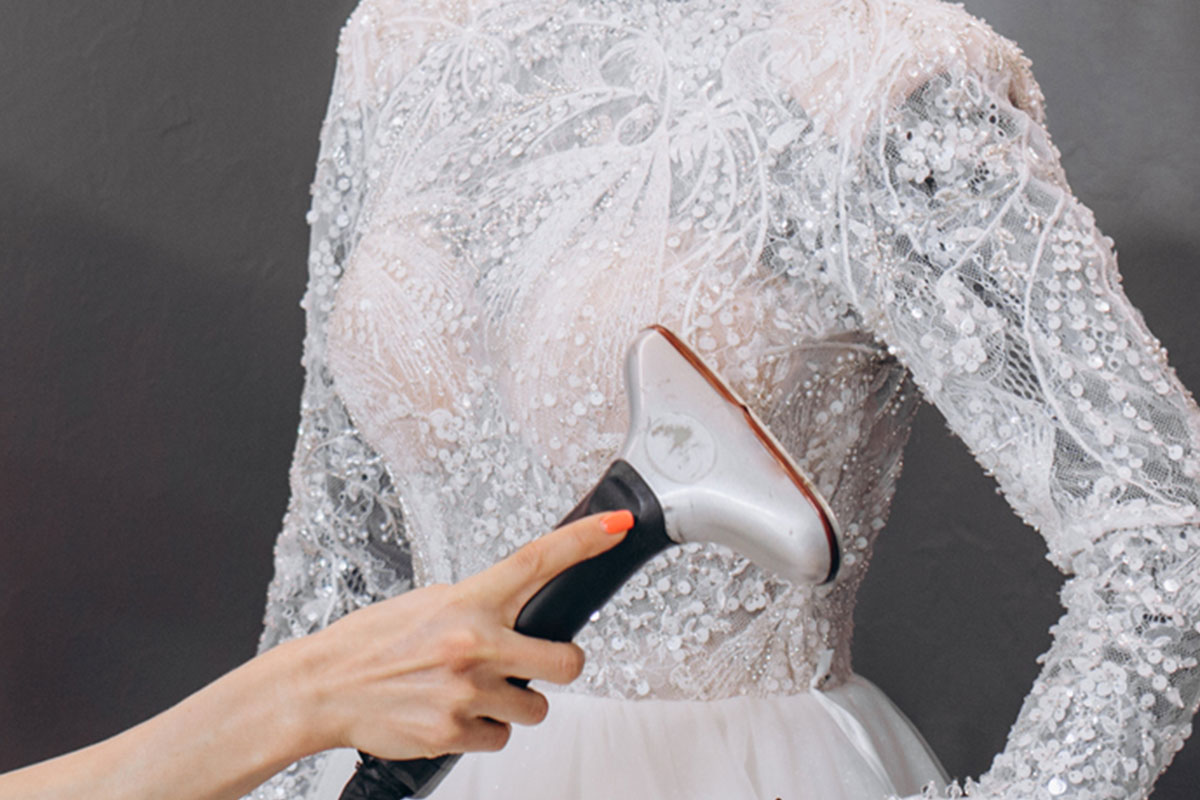
Wedding dresses can vary dramatically in fabric, construction, embellishment, condition, and staining. That is why every gown starts with an individual inspection.
We inspect your dress before cleaning and choose the process based on its fabric, construction, soil, and stains.
Most synthetic wedding dresses are wet cleaned. Dry cleaning is also available and may be used when oils or waxes remain or when the fabric requires it. Silk gowns will usually require dry cleaning.
After the initial cleaning, stubborn areas are treated by hand, with special attention often given to heavily soiled areas such as the hem.
After cleaning is complete, the gown is steamed and pressed, placed on an acid-free bust form to help hold its shape, carefully folded, and packed in its preservation box.
We evaluate the dress at no charge before providing a preservation quote.
Wedding dress cleaning and preservation generally ranges from $290 to more than $350, depending on the gown and the work involved.
Most gowns can be completed within two weeks or less. More complex or heavily soiled dresses may require a month or longer.
A wedding dress often needs more than a single trip through a cleaning process. Don’s works through the gown carefully, adjusting the approach according to the fabric, stains, and how the dress responds.
The process starts with an evaluation of the fabric, construction, soils, and stains. The goal is to choose the cleaning method that gives us the best opportunity to improve the gown while minimizing unnecessary risk to the material.
This evaluation also allows us to provide a cleaning and preservation quote before the work begins.
Most synthetic wedding gowns are wet cleaned.
If oils, waxes, or other soils do not respond adequately to wet cleaning, dry cleaning may be used when appropriate. Silk gowns generally require dry cleaning because of the way the fabric responds to moisture and cleaning.
The method follows the dress—not the other way around.
After the initial cleaning, we focus on remaining soil and stains individually. The hem often needs additional attention because it can collect significant dirt during the wedding day.
When appropriate, a gown may be cleaned an additional one or two times as we continue working on stubborn areas.
We continue while the gown is improving and the fabric is responding well. If a stain stops improving or the material begins showing signs of stress or wear, we stop rather than risk damaging the dress simply to keep chasing a stain.
Not every stain can be removed completely without risking the garment.
If a stain remains after we have safely taken the treatment as far as we believe the dress should tolerate, we can give you the opportunity to inspect the gown before preservation and approve moving forward.
That way, you know the condition of your dress before it is packed away.
Once cleaning is complete, the gown is steamed and pressed.
We then place it on an acid-free bust form to help maintain its shape in storage, fold it carefully, and pack it neatly into its new preservation box.
Makeup, dirt around the hem, oils, waxes, and other soils do not always respond to the same treatment. Rather than assuming one cleaning cycle is enough, we reassess the gown after cleaning and continue working by hand where additional improvement is possible. The goal is not to promise that every mark will disappear. It is to improve the gown as much as the fabric safely allows.
A cleaning method that works well for one wedding dress may not be right for another. Most synthetic gowns can go through wet cleaning, while silk typically requires dry cleaning. Other conditions may also affect the process, which is why inspection comes first.
Most wedding dresses can be cleaned and preserved within two weeks or less. A heavily soiled gown, complex construction, difficult staining, or a dress that requires repeated cleaning can take a month or longer. Exact timing can be difficult to predict before the work begins because part of the process depends on how the fabric and stains respond. If you are working around a particular date, ask us about timing when your dress is evaluated.
A wedding gown can carry far more than its purchase price. It can hold memories of the day itself and become something you want to keep for years to come.
Don’s has served the Evansville area since 1956, but experience alone is not the whole story. Our wedding dress process is built around the individual garment.
We inspect before choosing a cleaning method. We continue stain work only while the gown is improving and the fabric can tolerate it. And when a stubborn stain cannot be removed completely without pushing the material too far, you can have the opportunity to see the gown before it is preserved.
It is a careful, practical approach designed around one goal: doing as much as we reasonably can for your dress without sacrificing the dress in pursuit of a perfect-looking result.
Cleaning and preservation generally ranges from $290 to more than $350. The final price depends on factors such as fabric content, gown construction, the amount of cleaning required, alterations or repairs, and any accessories you would like stored with the dress. Don’s provides a free evaluation and quote before the preservation work begins.
Most gowns can be completed in two weeks or less. Complex dresses or gowns with extensive soil and staining may require a month or longer. Because some gowns need repeated treatment, an exact completion time can be difficult to determine until we see how the dress responds.
No. The cleaning process depends on the gown. Most synthetic wedding dresses are wet cleaned. Dry cleaning may be used when needed for particular soils, including oils or waxes that remain after wet cleaning, while silk gowns generally require dry cleaning.
We continue treating stubborn areas while we are seeing improvement and the fabric is tolerating the work. If further treatment is no longer improving the stain or could place too much stress on the material, we stop. You can be given the opportunity to inspect and approve the gown before it moves into preservation.
Yes. When stains remain after cleaning has been taken as far as is appropriate for the gown, customers are offered the opportunity to inspect the dress in person before approving preservation.
Accessories can be included with the gown when appropriate. Let us know what you would like preserved with the dress during the evaluation. Accessories can affect the final preservation price.
Related Wedding & Garment Care
Need something beyond cleaning and preservation?
Wedding Dress Alterations
Explore professional alterations and repairs when your gown needs changes to its fit or construction.
Dry Cleaning in Evansville
Need professional care for suits, dresses, formalwear, or other garments? Explore Don’s dry cleaning services in Evansville.
You do not need to know which cleaning method your gown needs before you bring it to Don’s. That decision starts with the dress itself.
We’ll evaluate your gown at no charge, look at its fabric, construction, condition, and stains, and explain the recommended cleaning and preservation approach before the work begins.